The Dalton Nuclear Institute highlights the importance of nuclear materials while also exploring the potential of nuclear fusion as a future energy source and the challenges that lie ahead
Nuclear research and its applications are rapidly evolving, shaping the future of energy production, medical advancements, and national security.
At the forefront of this innovation is the Dalton Nuclear Institute at The University of Manchester, which stands as a leader in nuclear research in the UK. With a comprehensive focus that encompasses everything from fusion to social sciences, the Institute is paving the way for groundbreaking discoveries and technological developments.
The Innovation Platform spoke with Aneeqa Khan and Patrick Hackett from the Dalton Nuclear Institute to discover more about its work and gain insights into the nuclear landscape.
Can you provide an overview of the Dalton Nuclear Institute and the nuclear research environment at The University of Manchester?
The Dalton Nuclear Institute is an umbrella organisation that covers the breadth of nuclear research at The University of Manchester. This includes everything from fission to fusion, medical applications and social sciences. It has the UK’s largest and most comprehensive academic nuclear research capability.
Why are nuclear materials considered essential in today’s scientific and technological landscape? Can you discuss their roles in energy production, medical applications, and national security?
Nuclear materials are a hugely important area of research. We need materials that can withstand the challenging environments that occur in fission and fusion reactors. They enable us to build operating fission reactors that put energy on the grid, and also experimental fusion reactors, and hopefully operational fusion reactors in the future. They also allow us to carry out various diagnoses and treatments in the medical sector.
Can you explain the process of nuclear fusion and how it compares to nuclear fission?
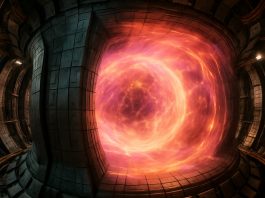
Nuclear fusion is the process that powers the Sun, where two atoms fuse together (opposite of fission, where we split atoms), liberating huge amounts of energy. Recreating the conditions in the centre of the Sun on Earth is a huge challenge. We need to heat up isotopes of hydrogen (deuterium and tritium) gas so they become the fourth state of matter, called plasma. In order for the atoms to fuse together on Earth, we need temperatures ten times hotter than the Sun – around 100 million degrees Celsius, and we need a high enough density of the atoms and for a long enough time. The reaction between the deuterium and tritium results in the production of helium and high-energy (14 MeV) neutrons.
Fusion is considered a green source of energy as it does not release carbon dioxide into the atmosphere. If we can make it work, it has the potential to provide a stable baseload of electricity to the grid, as well as the potential for secondary applications such as hydrogen production or heating. It is not ready yet, and therefore, it can’t help us with the climate crisis now; however, if progress continues, it has the potential to be part of a green energy mix in the latter half of the century and should be part of our long-term strategy, while we use other existing technologies such as fission and renewables in the near term.
Fusion is already too late to deal with the climate crisis. We are already facing the devastation of climate change on a global scale. In the short term, we need to use existing low-carbon technologies, such as fission and renewables, while investing in fusion for the long term to be part of a diverse low-carbon energy mix. We need to be throwing everything we have at the climate crisis. In all these technologies, we need to invest in training people from all over the world so that they can develop the solutions needed to face climate change. It is important to have both short and long-term strategies.
What are the primary research objectives currently being pursued in nuclear fusion programmes, and how do these objectives aim to address the challenges of energy production?
There are objectives for demonstrating net engineering energy gain:
- A key objective is to demonstrate net engineering energy gain.
- Developing materials that can withstand the high-energy neutrons and extreme heat loads associated with nuclear fusion,
- Breeding and handling of tritium,
- Confining and demonstrating a burning plasma,
- Further development of remote handling techniques/robotic maintenance,
- Novel manufacturing techniques and developing the associated supply chain.
- Digital engineering,
- Developing regulations so that when the technology is ready, we can get fusion energy on the grid.
What are some of the major challenges facing the field of nuclear fusion research today? How does the safety of fusion energy compare to that of nuclear fission and other energy sources?
We are still a way off from commercial fusion. We need an engineering net energy gain of the whole device that takes into account all plant inefficiencies. Building a fusion power plant also has many engineering and materials challenges. However, investment in fusion is growing, and we are making real progress. We need to train a huge number of people with the skills to work in the field, and I hope the technology will be used in the latter half of the century. Global collaboration is key to achieving this.
Every technology has associated risks. Fission and fusion have the systems in place to manage these risks.
What strategies are being developed in the UK for managing nuclear waste? How does research at institutions like the Dalton Nuclear Institute contribute to finding effective solutions?
Addressing the decommissioning and remediation of legacy radioactive material is a significant global challenge, with the safe, secure, and environmentally responsible storage of radioactive waste at an affordable cost as its ultimate aim.
We are funded by both UK Research and Innovation and industry (e.g. Nuclear Waste Services, Sellafield Ltd.) and lead the Nuclear Waste Services Research Support Office (NWS RSO), the NDA Plutonium Hub and the Sellafield Effluent and Decontamination Centre of Expertise (SEDCoE) in collaboration with key University partners. A key feature of our research is the close collaboration between academic and industry subject matter experts to define research which underpins real-world nuclear environmental challenges.
Beyond energy production, what potential applications could arise from advancements in nuclear fusion technology? How might fusion be integrated into other sectors, such as transportation or industry?
Process heat generation could be another application of nuclear fusion in the future. Any industry that requires large amounts of heat would benefit from this.
The enabling technologies, such as high-temperature superconducting magnets and robotics, being developed for fusion are also applicable across a wide range of industries.
What is the estimated timeline for achieving successful nuclear fusion, and what factors might influence its development as a reliable source of energy production?
Nuclear fusion has the potential to be part of a green energy mix in the latter half of the century and should be part of our long-term strategy while we use other existing technologies, such as fission and renewables, in the near term.
Please note, this article will also appear in the 22nd edition of our quarterly publication.